Protect the first observation
A numerical ranking can anchor a scout’s interpretation before a match begins. Once an athlete is labelled exceptional or ordinary, ambiguous actions may be read in ways that support the label. Where practical, gather an initial observation before revealing the model’s recommendation. This preserves a useful point of comparison.
Independence does not require ignoring data. Give observers a shared role description and evidence rubric, while withholding unnecessary ranking cues. Ask them to distinguish what happened from what they inferred. “Received under pressure and found a forward pass” is an observation; “has elite mentality” is a broader interpretation requiring much more support.
Use multiple contexts when resources allow. Training, competitive play and a structured task can illuminate different behaviours. No single setting is entirely authentic or complete. The point is not to accumulate a larger dossier indiscriminately, but to answer specific uncertainties with proportionate evidence.
Turn disagreement into a research question
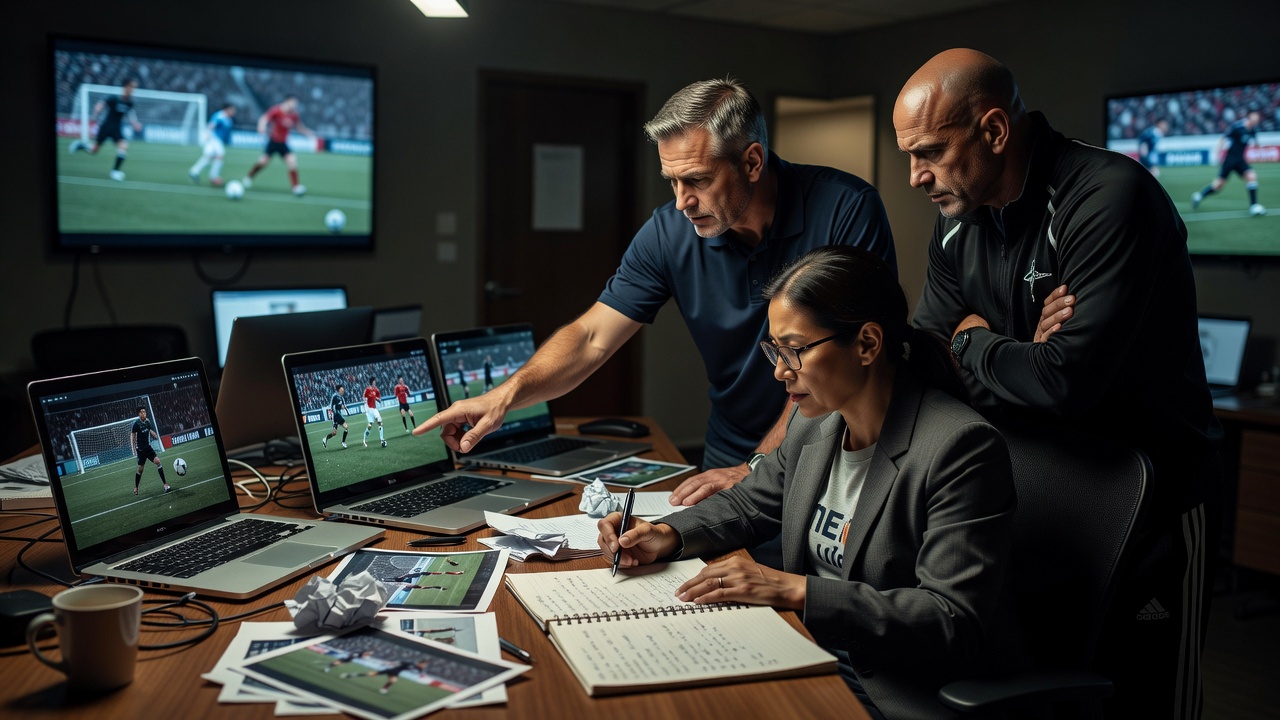
When a scout and model disagree, neither should win by default. The scout may have observed tactical intelligence absent from the data. The model may have highlighted a consistent pattern the scout overlooked. Or both may be interpreting the same weak evidence too confidently.
Record the disagreement in a structured way: the claim, supporting evidence, alternative explanation and next observation needed. Avoid a free-text override that merely says “experience.” Equally, avoid forcing the scout to accept a score because the underlying method is described as advanced.
Compare overrides over time, but interpret their outcomes cautiously. A coach’s decision can change the development opportunity itself. If the athlete receives better support after an override, later improvement does not isolate the original judgment’s accuracy. Review the process and the outcome together.
Make the next action smaller than the claim
A discovery recommendation should usually lead to another observation, not a declaration of destiny. Define a manageable next step: review a full match rather than a highlights package, observe a different role, or repeat a test under documented conditions. State what question that step is expected to resolve.
A useful workflow has separate records for identification, assessment and selection. Identification broadens attention. Assessment tests a defined hypothesis. Selection balances current requirements, available places and evidence. Keeping those stages distinct helps prevent a provisional signal from hardening into a permanent label.
UK Sport’s work on performance pathways offers context for organised development, while Loughborough University’s sport science research illustrates the breadth of disciplines relevant to performance. Neither provides a universal checklist for individual potential. Technical, tactical, physical and psychosocial considerations need role-specific expertise and careful boundaries.
Assumption
Human review means a coach can approve the automated list.
Observation
Meaningful review requires access to evidence, a documented alternative and real authority to change the outcome.
Explain the process without defining the person
Athletes and families should understand what information is considered, what the tool contributes and who makes the decision. Use plain language. A statement that someone is “below the AI threshold” offers no meaningful explanation of relevance, uncertainty or possible correction.
Provide a route to challenge factual errors and request review. Where young people are involved, communicate in age-appropriate language and follow the organisation’s safeguarding arrangements. Do not publish individual rankings or ask families to circulate sensitive records simply to obtain a second opinion.
Parents can ask practical questions: Was my child compared with a suitable group? How were missed sessions treated? Can a development change lead to reassessment? These are not requests for a guaranteed place. They are reasonable questions about the quality and fairness of the process.
The Child Protection in Sport Unit provides UK safeguarding resources. NSPCC guidance can also help organisations think about safe communication and handling concerns. Sporting ambition should never become an excuse to weaken privacy, welfare or appropriate professional boundaries.
Give responsibility a name and a record
Assign a person who owns the decision process, not merely the software contract. They should know when the model is out of scope, who can suspend its use and how concerns are investigated. A vendor’s technical support channel cannot replace organisational responsibility for an athlete-facing decision.
Keep a proportionate decision log: evidence considered, model version, uncertainties, human interpretation and next review date where relevant. Restrict access and avoid speculative character judgments. Notes can affect people long after their original purpose has been forgotten.
Finally, preserve routes back into observation. Development is uneven, circumstances change and early records can be misleading. A responsible discovery programme treats a negative assessment as a limited decision under current evidence, not a permanent verdict on a person’s capacity to grow.
Reference starting points
- UK Sport
- Loughborough University: Sport, Exercise and Health Sciences
- Child Protection in Sport Unit
- NSPCC
The people shown in editorial photographs are not presented as AI-assessed athletes.